JEREMY Corbyn would harm the economy and Labour’s election chances if he became party leader, our poll reveals.
The ComRes/Sunday Mirror survey found the veteran left-winger is a “Marmite” character who has divided the nation.
Our poll showed more than twice as many voters think that Corbyn would make the British economy worse rather than better (36% to 14%) if he became Prime Minister.
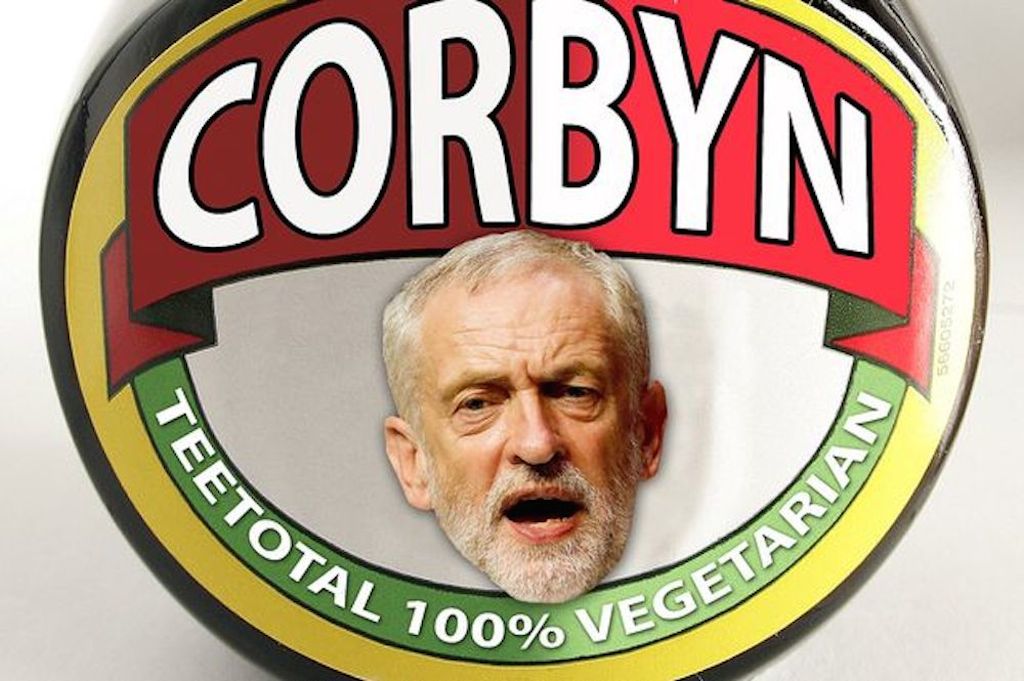
Jeremy Corbyn: Marmite Man (pic: Sunday Mirror)
Of the four leadership challengers, he has the highest proportion of people (31%) saying he would worsen Labour’s chances of a general election victory in 2020.
Yet, Corbyn also has the highest proportion of voters (21%) who say he would improve the party’s chances of winning the next election.
The findings reflect how bookies’ favourite Corbyn has managed to draw huge crowds to his rallies, while fuelling an “Anyone But Corbyn” backlash at the same time.
Andy Burnham is the only leadership candidate to have more of the British public saying he would improve (19%) than worsen (14%) Labour’s chances of an election win.
Asked which of eight politicians would give Labour the best chance, former Foreign Secretary David Miliband came top with 34% amid swirling rumours he could return from his charity role in New York to Westminster before the 2020 election.
Corbyn topped the rankings among the current leadership candidates as the best place to improve Labour’s election chances on 21%, followed by Burnham on 19%, Yvette Cooper on 15% and Liz Kendall trailing in fourth place on 11%.
Voters were unimpressed at the prospect of any of Labour’s last three leaders making a return. Just 13% thought Tony Blair would improve the party’s election prospects, while Gordon Brown scored just 9% and Ed Miliband a lowly 6%.
Among the Tory voters that Labour needs to woo, Burnham appears to have the broadest appeal. The former Health Secretary has the highest proportion of Conservative voters (17%) saying that he would improve Labour’s chances of election victory compared to Cooper (14%), Kendall (14%), and Corbyn (10%).
When it came to the likely impact of Corbyn becoming PM, voters believed his policies would hit them in the pocket and damage Britain’s international relations.
Three times as many think Corbyn would make Britain’s standing around the world worse than better (37% to 11%).
Our survey found that 31% he would worsen the finances of ordinary people compared to just 18% who believed he would leave them better off.
When it came to the Labour Party, 32% believed the North London MP would harm the party’s popularity against 21% who thought he would improve it.
Job opportunities in the UK would also be hit under a Corbyn leadership with 28% believing employment prospects would be worse against 20% who thought they would be better.
But his plan to renationalise the railways has won him support. According to our survey, 23% thought Britain’s trains would be better with Corbyn as PM compared to 22% who reckoned they would be worse.
ComRes spokesman Adam Ludlow said: “Jeremy Corbyn is very much the marmite candidate – of four MPs standing for the leadership. He receives both the most positive and the most negative opinions of how electable he is.
“Many Brits either are not sure who his rivals are or think they would not make much of an impact to Labour’s chances of winning the next election. “Corbyn, though, receives the highest proportion of both the public and Labour supporters saying he would improve Labour’s chances – and the highest proportion saying he would worsen them.
“What may be most worrying for the party is that none of the candidates have generated significant public enthusiasm over the course of the campaign. And now members and supporters are going having to make their choice.”
Overall, the Tories have lengthened their lead over Labour to 11 points since David Cameron’s election victory in May triggered the departure of former Labour leader Ed Miliband.
The Conservatives are up two points on 40%, while Labour has slipped back two points to 29%.
Nigel Farage’s Ukip are unchanged on 13% with the Lib Dems also unchanged in fourth place on 8%.
* ComRes interviewed 2,035 adults online on August 12 and 13 2015
 Vincent Moss